-

Every Bug Tells a Story: What Debugging Really Teaches You
Most people see a bug as something to fix. I’ve learned to see it as something to understand.
-

Why Users Don’t Read Error Messages
Most customers don’t ignore error messages because they don’t care—they ignore them because they’re focused on solving a problem. Understanding the psychology behind how people react under stress can help us write better error messages, reduce support tickets, and create software that’s easier to use.
-

Think Like Sherlock Holmes: A Better Way to Debug and Troubleshoot
Most bugs don’t reveal themselves to the first person who looks. They reveal themselves to the person who asks better questions. Great debugging isn’t just a technical skill. It’s detective work, where evidence matters more than assumptions and curiosity solves mysteries that experience alone cannot.
-

Why Empathy Is a Technical Skill
The best technical professionals don’t just understand systems. They understand the people using them. That’s why empathy isn’t separate from technical expertise. It’s one of the skills that makes great troubleshooting, communication, and product design possible.
-

Support Is Product Design
Most people see customer support as something that happens after the product is built. In reality, every support conversation reveals how people experience your product. The best companies don’t treat support as a cost center. They use it as one of their most valuable design tools.
-
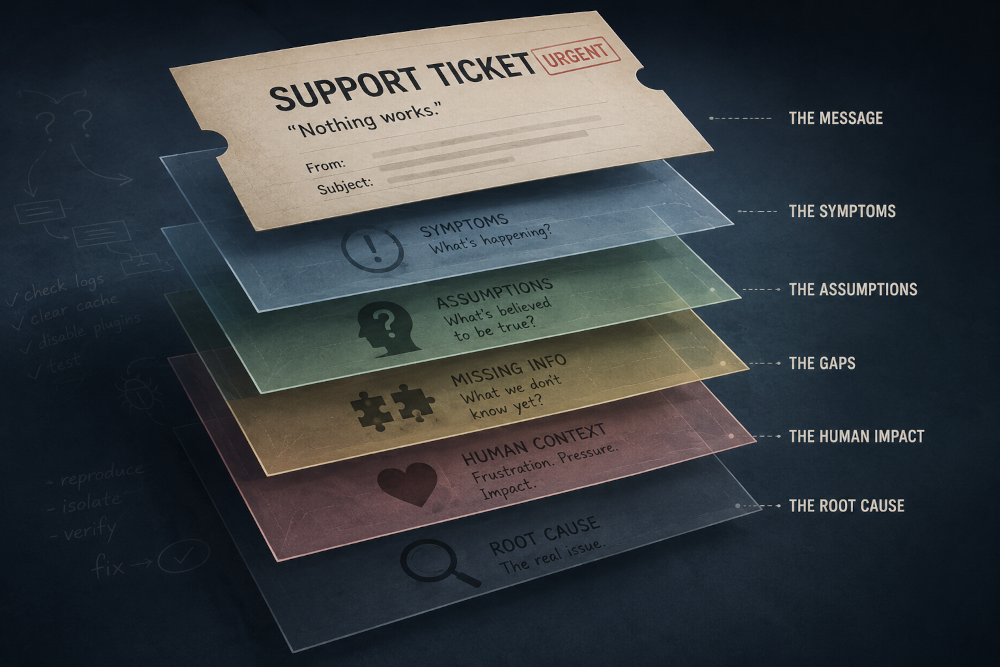
What Makes a Support Ticket Truly Difficult (It’s Not the Technology)
The hardest support tickets rarely start as technical problems. They begin with uncertainty, frustration, and incomplete information. This article explores what experienced support engineers learn from difficult cases, and why great troubleshooting is as much about curiosity, communication, and critical thinking as it is about finding bugs.