“AI is going to replace support engineers.”
I’ve heard some version of that sentence hundreds of times over the past couple of years.
Sometimes with excitement. Sometimes with dread. Usually somewhere in between.
If you work in WordPress support, you’ve probably had that thought too, if not out loud, then quietly, somewhere in the back of your mind while closing your fiftieth ticket of the week.
So let me give you a straight answer, based on fifteen years in WordPress support and tens of thousands of customer conversations.
AI isn’t replacing WordPress support. It’s redefining what good support actually looks like.
That distinction matters more than it might seem at first.
Why the “AI Will Replace Support” Argument Feels Convincing
The logic is clean on the surface.
Support involves answering questions. AI answers questions. Therefore, AI replaces support.
And honestly? AI has earned some of that reputation. It can answer documentation questions in seconds, explain WordPress functions, draft polished responses, analyze error logs, and generate code, often faster than any human.
Looking at that list, it’s easy to assume that technical support is simply next on the automation checklist.
But that assumption only holds if you believe that support is all about answering questions.
It is not.
The Visible Work and the Invisible Work
Every support ticket has two layers.
The visible layer is the message the customer sent. The invisible layer is the actual problem, which is rarely exactly what the customer described.
A customer writes: “My website is broken.”
That’s not a question. That’s a distress signal.
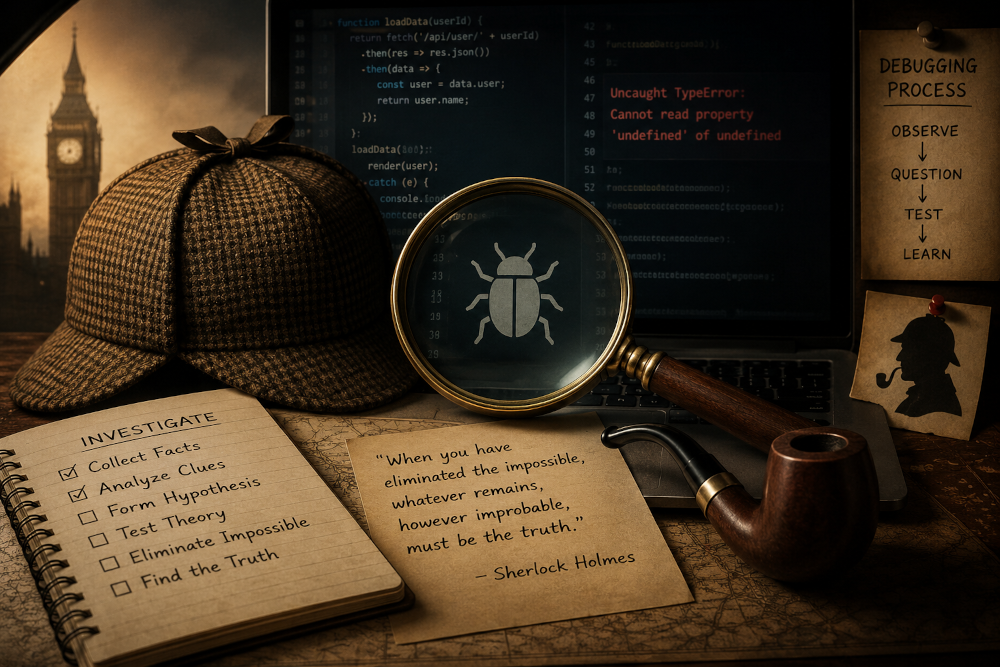
An experienced support engineer doesn’t look for the answer. They start an investigation. They ask questions, eliminate possibilities, look for patterns in the symptoms, and work backwards from what they can see toward what they can’t.
That investigative process — the ability to take incomplete, inaccurate, emotionally loaded information and turn it into a coherent diagnosis — is what support actually is.
AI can retrieve information. It cannot replace years of accumulated pattern recognition that tells you, within two minutes of reading a ticket, that this looks like a caching conflict and not a plugin incompatibility.
What AI Is Genuinely Good At And Why That’s Great News
Let me be clear about something: AI is useful. Really useful.
If a customer pastes an error message into a chat, AI can often explain it instantly. If they need a PHP function explained, or CSS cleaned up, or a response drafted, AI handles all of that well. Documentation lookups that used to take five minutes now take thirty seconds.
For support engineers, that’s not a threat. It’s leverage.
The repetitive, low-judgment work that used to fill your queue? AI can own most of it.
Which means humans get to spend more time on the cases that actually require human judgment, the unusual, high-stakes, technically ambiguous problems that are also, honestly, the most interesting ones.
Why WordPress Support Is Harder to Automate Than It Looks
No two WordPress sites are built the same way.
Different themes, plugins, hosting environments, PHP versions, caching configurations, custom code, third-party integrations. Every site is its own ecosystem. Two customers can report identical symptoms while dealing with completely different root causes.
This is why experienced WordPress troubleshooting has never followed a script.
You’re not pattern-matching against a knowledge base. You’re reasoning about a specific system in a specific state, based on incomplete evidence, and trying to reach a confident conclusion with as few wrong turns as possible.
AI doesn’t do that well. Not yet. Possibly not ever, at the level a seasoned engineer does it.
There’s also the human side of support, which tends to get ignored in these conversations. Customers don’t just need solutions. They need confidence. They need to feel like someone competent has looked at their problem and understood it. That reassurance communicated through tone, clarity, and ownership is a professional skill. It’s not a soft skill. It’s a hard one, and it matters as much as the technical answer.
What’s Actually Changing in WordPress Support
The role is evolving, and pretending otherwise would be dishonest.
Support engineers are becoming investigators more than information providers. As AI absorbs the routine work, the value of a human support engineer shifts away from knowing and toward thinking.
The competitive advantage isn’t knowing WordPress inside out anymore; that still matters. It’s knowing how to evaluate evidence, how to challenge your own assumptions, how to communicate under pressure, and how to use AI as a thinking tool rather than an answer machine.
The engineers who use AI to search documentation, draft first responses, summarize long threads, and brainstorm possible causes while applying their own judgment to everything that matters are going to be significantly more effective than those who either ignore AI entirely or defer to it uncritically.
The Question Worth Asking
So, will AI replace WordPress support engineers?
I don’t think that’s the right question.
A better one: What parts of WordPress support should humans stop doing because AI can handle them better?
Let AI search documentation. Let it draft routine replies. Let it handle repetitive, low-stakes queries that don’t require investigation.
Then spend your time doing what AI can’t: investigating unusual problems, communicating clearly with people under stress, thinking critically about evidence, and building the kind of trust that makes customers come back.
Behind every support ticket is a person trying to keep their website, their business, or their livelihood running. They’re not just looking for a technically correct answer. They’re looking for someone who actually understands their problem.
That has always been the heart of this work.
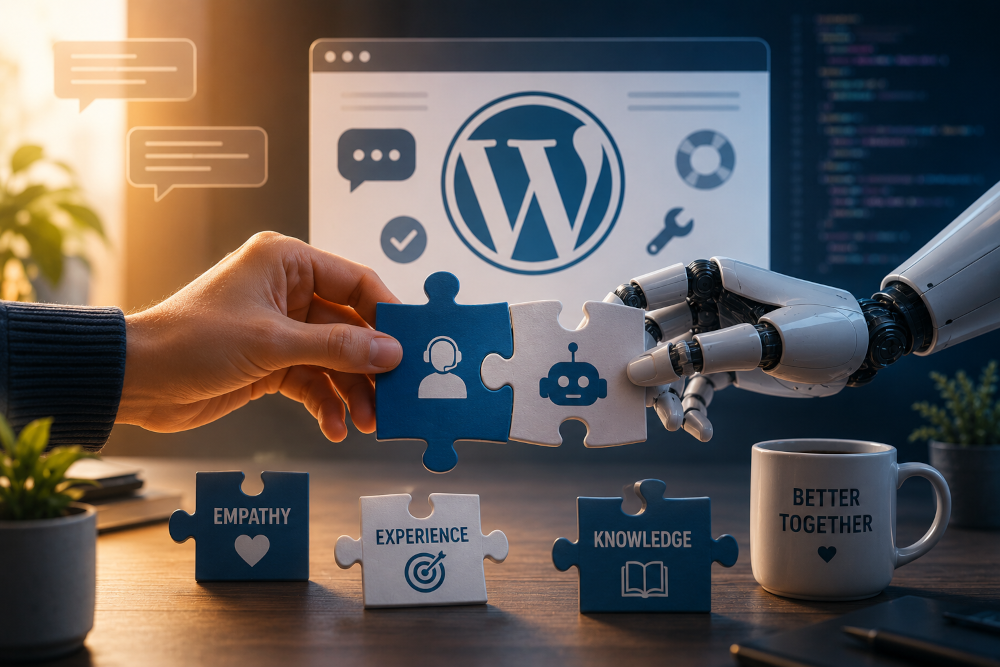
The future won’t belong to engineers who compete against AI. It will belong to those who combine technical depth, critical thinking, clear communication, and AI into something more capable than any one of those things alone.