
Most companies think marketing ends when someone clicks Buy Now.
That’s where support begins.
And strangely enough, that’s often when the real marketing starts.
Every support conversation tells a customer something about your company. It tells them whether you keep your promises. Whether you care after the payment is complete. Whether the polished marketing on your homepage matches reality.
Customers remember those moments far longer than they remember your advertisements.
The Most Believable Advertisement
Anyone can write “We care about our customers.”
It’s easy.
Showing it when someone is frustrated? That’s much harder.
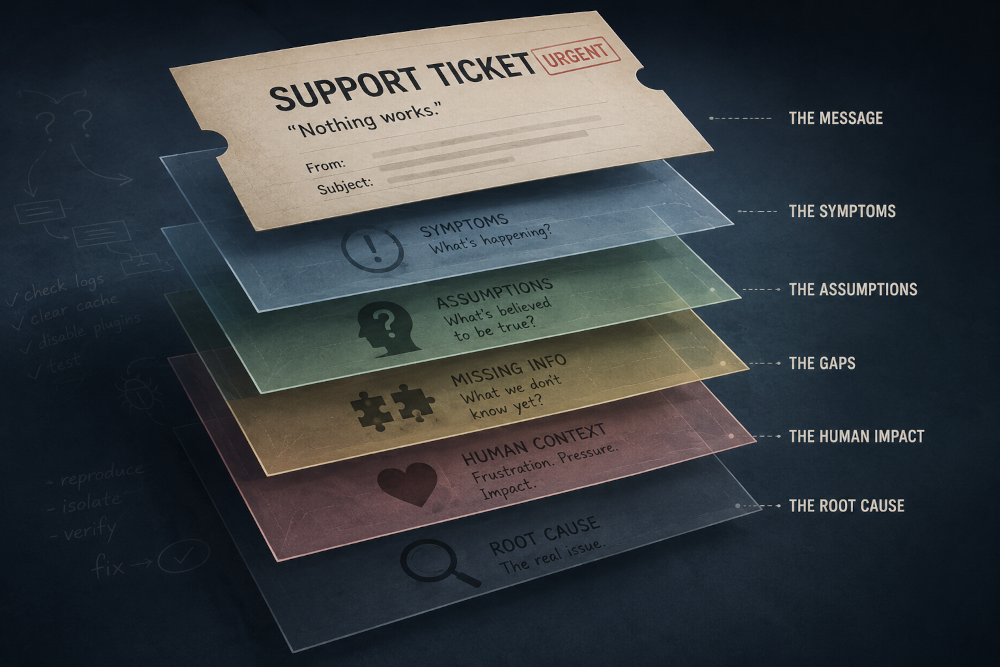
Imagine a customer who has spent hours trying to solve a problem. They’ve searched documentation, watched tutorials, and tried every solution they could find. Nothing works.
By the time they contact support, they aren’t just looking for an answer. They’re looking for reassurance that they made the right decision.
A fast, thoughtful response does something remarkable. It doesn’t simply solve a technical issue. It restores confidence.
That’s marketing. Not because anyone was selling something, but because trust grew stronger.
Support Creates Stories
People rarely tell their friends about an advertisement they saw. They do tell stories about exceptional customer service.
“They fixed my problem in ten minutes.”
“They replied on a Sunday.”
“They even recorded a video showing exactly what I needed.”
Those stories travel further than many marketing campaigns. Word of mouth has always been powerful because it comes from experience instead of promises.
Support creates those experiences every day.
Every Ticket Is Public, Eventually
Most support conversations happen in private.
Their impact doesn’t.
A customer who has a great experience is more likely to leave a positive review, recommend your product, renew their subscription, or simply become more forgiving when something goes wrong in the future.
A customer who feels ignored can have the opposite effect.
One unresolved ticket can become a forum post.
A frustrated email can become a social media thread.
A poor experience can influence dozens of future buyers who were never part of the original conversation.
Support isn’t hidden behind the scenes anymore.
It’s part of your public reputation.
Marketing Sets Expectations
Support Confirms Them.
Marketing tells people what life will be like after they choose your product.
Support proves whether that story was true.
If marketing promises simplicity but support feels confusing, customers notice.
If marketing promises reliability but support disappears during critical moments, customers notice.
Consistency matters.
The strongest brands aren’t built because their advertisements are clever.
They’re built because every interaction reinforces the same message.
The Cost of Poor Support
Companies often calculate the cost of hiring support staff.
Few calculate the cost of disappointing customers.
Every unresolved issue quietly affects retention.
Some customers never complain.
They simply leave.
Marketing teams then spend thousands trying to replace customers who might have stayed if one support interaction had gone differently.
Retention is cheaper than acquisition.
Support plays a huge role in retention.
Support Teams Hear the Truth First
Marketing teams run surveys.
Product teams analyze usage data.
Support teams hear the unfiltered version.
Customers don’t hide their confusion inside support tickets.
They explain exactly where expectations broke down.
They reveal unclear interfaces, missing documentation, confusing pricing, broken workflows, and overlooked edge cases.
Every ticket is customer research waiting to be used.
The best companies don’t keep support isolated.
They let support shape the product, the documentation, and even future marketing campaigns.
The Brand Lives in Small Moments
A thoughtful follow-up.
A clear explanation.
An honest apology.
Admitting uncertainty instead of pretending to know everything.
These moments don’t appear in advertisements. Yet they define how customers remember a company.
People may forget your logo.
They rarely forget how you treated them when they needed help.
Final Thoughts
Support isn’t a department that exists after marketing.
It’s an extension of it.
Every response either strengthens your brand or quietly weakens it.
Every solved problem becomes proof that your company keeps its promises.
And in a world where customers trust experiences more than advertisements, that may be the most powerful marketing strategy of all.