When people think about technical skills, they picture code.
Programming languages.
System architecture.
Debugging.
Networking.
Databases.
Empathy rarely makes the list.
I think that’s a mistake.
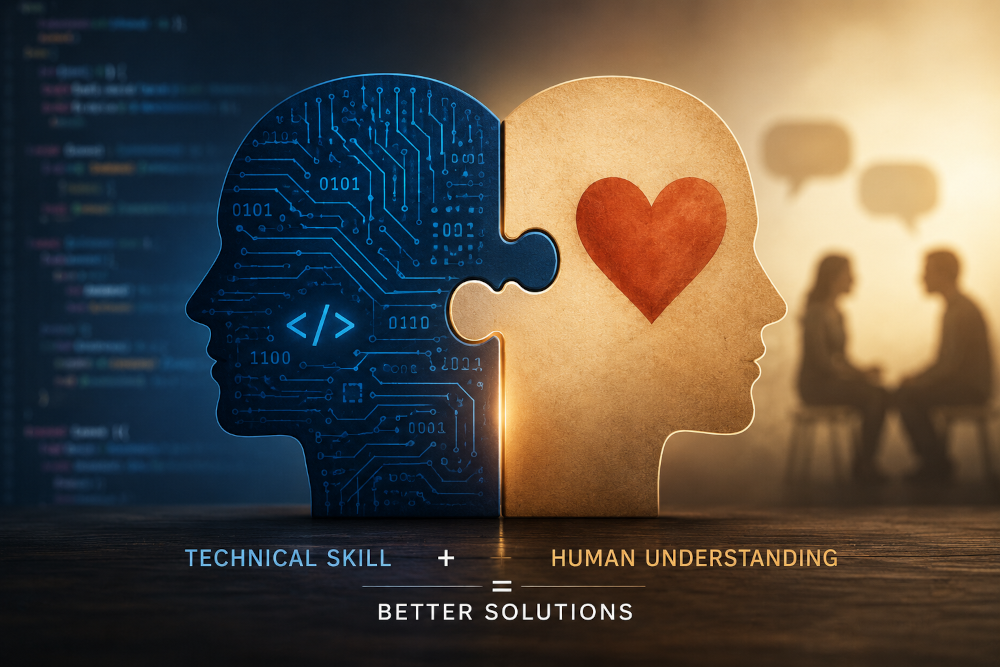
After more than a decade in technical support, I’ve become convinced that empathy isn’t a soft skill that sits beside technical expertise.
It’s part of technical expertise.
In many situations, it’s the difference between solving a problem and merely answering a question.
The Ticket Is Rarely the Problem
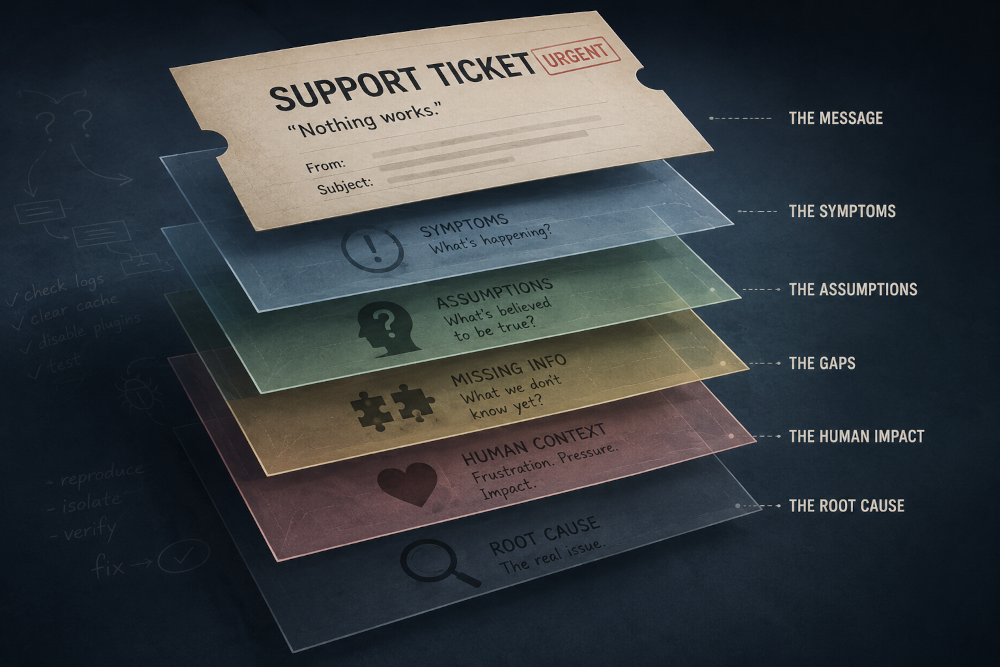
A customer submits a support request.
“Your update broke my website.”
Technically, that’s the issue.
But it usually isn’t the real problem.
Maybe they’re about to launch a new business.
Maybe the website belongs to their biggest client.
Maybe they promised their boss everything would be ready by Monday morning.
Maybe they’ve already spent six hours trying to fix it themselves.
You can explain the error perfectly.
You can even solve it.
And still leave the customer frustrated if you never acknowledge what they’re actually experiencing.
Technology creates technical problems.
People experience emotional ones.
Support has to solve both.
Reading Between the Lines
Experienced support engineers learn something unusual.
Customers don’t always tell you what’s wrong.
Sometimes they don’t know.
Sometimes they describe symptoms instead of causes.
Sometimes, frustration changes the way they communicate.
Sometimes fear makes them leave out important details.
Sometimes they don’t even tell what exactly is not working; they just explain how it affected them.
The real skill isn’t just reading the ticket. It’s reading the person behind it.
A message that sounds angry may actually be panic.
A short reply might come from someone answering between meetings.
A customer who keeps repeating the same question may not need another explanation.
They may simply need reassurance that they’re moving in the right direction.
Those aren’t psychological tricks.
They’re diagnostic skills.
Every Conversation Is Data
Developers collect logs.
Support engineers collect conversations.
Every sentence tells you something.
Which instructions confused the customer?
Which feature did they misunderstand?
Where did they expect something different?
What assumptions did they make?
Patterns begin to emerge.
After answering similar questions hundreds of times, you realize the product isn’t merely teaching users.
Users are teaching you about the product.
If many people make the same mistake, the problem usually isn’t the people.
It’s the design.
Empathy helps you notice those patterns before analytics ever will.
Good Explanations Start With Understanding
One of the biggest mistakes in technical communication is answering the question you wish had been asked.
We’ve all seen it.
A customer asks something simple.
The response turns into a detailed lecture full of technical terminology.
Everything is accurate, but almost nothing is helpful.
The best explanations don’t begin with information.
They begin with understanding.
What does this person already know?
What are they actually trying to achieve?
What’s the simplest path from confusion to clarity?
Answer that question, and suddenly complex technology becomes approachable.
Empathy Makes Better Troubleshooters
Debugging isn’t just about software.
It’s about assumptions.
You form a hypothesis.
You gather evidence.
You eliminate possibilities.
Eventually, the root cause appears.
Empathy follows a surprisingly similar process.
Instead of asking, “What’s happening inside the software?”
You ask, “What’s happening inside this conversation?”
What does the customer believe?
What are they worried about?
What information are they missing?
Why did they reach this conclusion?
The better you understand their perspective, the faster you identify the actual problem. Empathy isn’t slowing down troubleshooting.
It’s accelerating it.
Great Products Feel Like Someone Was Thinking About You
Think about the software you’ve enjoyed using most.
Chances are, it wasn’t just powerful. It felt considerate.
Error messages anticipated your confusion.
Documentation answered the question you hadn’t asked yet.
The interface guided you instead of fighting you.
Recovery was easy when you made a mistake.
None of that happens by accident.
It happens because someone imagined what users would experience before they experienced it.
That’s empathy in action.
And it’s every bit as technical as writing the code itself.
The Most Valuable Question
Over the years, I’ve noticed that experienced support engineers ask a different kind of question.
Not: “How do I fix this?”
But: “Why did this happen?”
And eventually:
“How can we prevent someone else from experiencing this?”
That’s where support becomes product design.
That’s where troubleshooting becomes improvement.
And that’s where empathy becomes engineering.
Beyond Support
This lesson reaches far beyond technology.
The best teachers understand where students get stuck.
The best managers understand why employees hesitate.
The best writers understand what readers are searching for.
The best designers understand what users are trying to accomplish.
In every case, technical knowledge explains the system. Empathy explains the people using it.
You need both.
Final Thoughts
We often separate technical ability from human ability, as though one belongs to engineers and the other belongs to customer service.
Real expertise doesn’t make that distinction.
The best technical professionals I’ve worked with are deeply curious about people.
They ask better questions.
They listen carefully.
They explain clearly.
They solve problems that others never notice because they understand not only how the system works, but how people experience it.
That’s why empathy isn’t a soft skill.
It’s one of the most practical technical skills you’ll ever develop.